Excursion 53, Part 2 (Eat Dessert First)

Try and think of the earliest dessert you ever ate.  Can you think of anything?  The earliest things I can remember, all from the time I was four or less, are animal crackers, vanilla wafers, ice cream (the earliest word I learned to spell, because my parents would ask one another, “Do you want to go get some i-c-e-c-r-e-a-m?”), and chocolate shakes.  The latter I remember because I got sick with some sort of stomach bug and had to go for several days without eating or drinking anything except for sips of water—that was how sensitive my stomach was.  I started fantasizing about a milkshake and, when I could finally eat again, I pleaded for a milkshake.  My parents, bless them, obliged—and I promptly threw it up.

Continue reading

Excursion 50, Part 3 (Steubenville at Dusk)

My fiftieth excursion had been a long, nice day and I was ready to go home.  But though I was already heading south for home, there was one stopping point left, as long as the light held out:  Steubenville, Ohio.  Steubenville is south of East Liverpool, also on the Ohio River, and also a struggling Rust Belt town.

Continue reading

Excursion 50, Part 2 (East to East Liverpool)

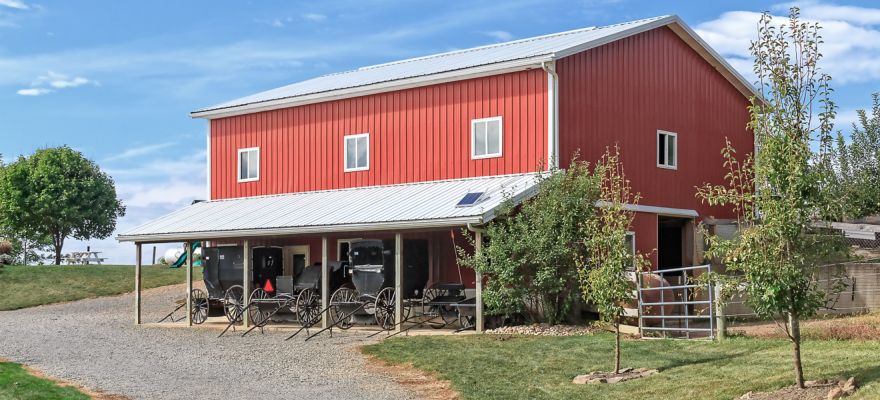
My 50th excursion, quite a milestone, took me northeast from Columbus to Coshocton (because all roads lead to Coshocton), and well beyond.  But let’s pick up a bit northeast of Coshocton, where I was driving northward through what was essentially the southern reach of traditional “Amish country” in Ohio (though Amish communities can be found throughout the state). Continue reading

Excursion 49, Part 1 (Swing around the Circle)

In September 2015, I took a page from infamous presidential accident Andrew Johnson, who in 1866 conducted what has come down in history as his “swing around the circle,” a series of campaign stops designed to influence the upcoming Congressional elections in his favor.  It started off okay but, God love him, President Johnson came to Ohio; Ohioans were vocally none too happy to see him, and it went downhill from there. His trip was widely considered a disaster.  Luckily, my own “swing around the circle” was not at all a disaster.  Rather, I embarked upon a pleasant, meandering circle around the area of Ohio between Columbus and Cleveland, a region rather devoted to agriculture.

Continue reading

Excursion 47, Part 1 (Agrarians and Antiquarians)

Ask two people about farming in America and you are likely to get two different answers.  Or, somehow, even three.  America’s farm economy is booming, but the family farm is in steep decline.  Except when it is not.  So here are some quick facts, or generalizations.  First, the amount of American farmland has been relatively stable for many decades—it has had a steady but slow decline of acreage, largely due to development, which has been more than compensated for by increased production. There are around 2.2 million farms in the U.S., but there are more bus drivers than farmers—and farmers are aging, though there are signs that a new generation of farmers is emerging. Analysts often talk of “corporate” farmers and indeed a relatively small number of farmers account for the majority of farm production, but most farmers themselves are still family farmers, with many of the so-called “corporate” farms still being run by families that have incorporated for business purposes. The size of the average farm is about 440 acres or so, triple that of a century ago—and this is a good thing, as it illustrates (among other things) the disappearance of tiny sharecropped farms. In any case, 440 acres is still a pretty modest average.

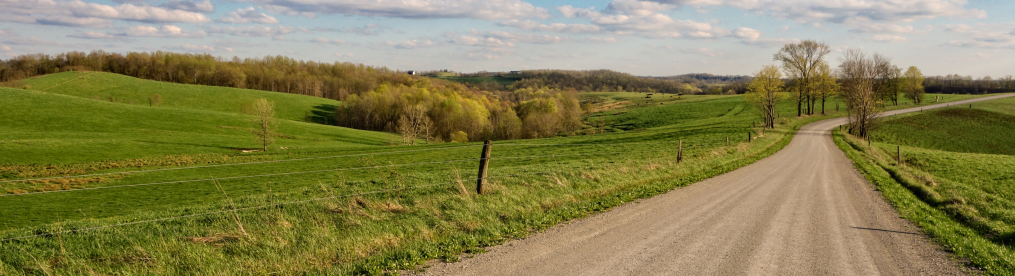
In mid-July 2015, I had an opportunity to take a drive through southwest Ohio’s farm country at the height of the growing season and it was a pleasant journey indeed.

Continue reading

Excursion 46, Part 2 (They Took All Their Things And Never Came Back)

(with apologies to Tom Waits)

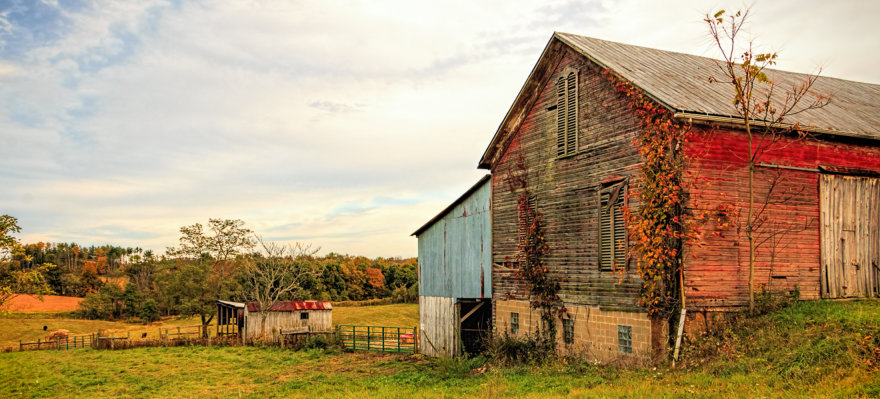
Abandoned houses seem to the the theme of this set of photographs and accompanying rambling commentary.  The block on which I grew up in El Paso did not have any abandoned houses; indeed, I’m hard-pressed to think of any in my childhood neighborhood. Of course, El Paso was a rapidly growing city and our house was located in the direction of greatest growth. It wasn’t until I moved to Columbus, Ohio, that old abandoned residences first made an impression on me—not that Columbus had any great number of them, but any older center city residential area will have at least some.

In more recent years, thanks to the great recession, abandoned homes have become such a big thing that squatting in them has also become a big thing, including by some of the extremists I study professionally in my “day” job. But the old homes pictured here are not recently abandoned, at least in the majority of cases.  They are older homes and many were clearly abandoned decades ago. Why?  In some cases, the buildings became decrepit and new houses were built on the same property. In some other cases, new owners may have bought the land—for farming or grazing—but did not need the house on the land.  In some cases, houses fell into decay during the owners’ lives and became more or less unsellable in that state, especially in small towns that might have suffered significant population loss.  There are a lot of ways homes can become derelict and I may have seen all of them.

Continue reading

Excursion 45, Part 2 (Castles of the Countryside)

A couple of years ago, I was inspired to see if I could find a house listing for my childhood home in El Paso. To my surprise, I found it on newspapers.com, a 1970 listing for a tiny (probably around 1,100 sq. ft.) 3-bedroom, 1-bath house listed at $13,750.  That year, 1970, was the year my parents moved from Pennsylvania to El Paso, Texas, and bought the house. I was four years old.   About 34 years later, after many years of rental living, I bought my own home.  Just a few days ago, I mused at the fact, because it hardly seems I have been living in my home for a dozen or so years now.

I mention these facts because this excursion—actually the second half of a long excursion that took place on March 21, 2015, features a lot of houses, of many different kinds, and they were all homes to one or in some cases perhaps many families. Many of these houses now lie abandoned and ruined—at some point they ceased being homes and reverted to being mere structures again. For some reason, that makes me sad.

Continue reading

Excursion 40, Part 2 (Palettes of Past and Present)

Photography is, I am learning in my own novice way, in many ways the study of light.  But it is more than that, too.  It is also the study of color and of texture.  I can’t help but think that this is somehow a metaphor for living life.  Light is the world we live in, the ocean in which we swim.  Color represents those things around us, the things we see, the things we notice, the things we react to.  Sometimes these colors of life are bright and superficial, sometimes darker and more soulful.  But perhaps most important of all is texture.  Texture is richer, deeper.  No matter what the color, it is the texture that reveals the truth of something.  Texture is not so much life as how you live your life—the choices you make, the way the world wears on you—etching grooves deep into your surface.  Colors can change, but texture abides.  And as we live our life, the texture of that life defines us more and more.

Continue reading

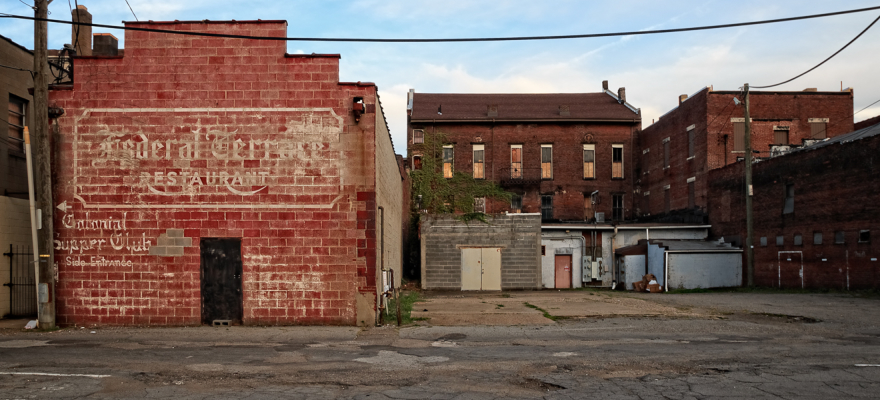
Excursion 38, Part 1 (Brick, Brick, O Beautiful Brick)

We humans are a social species, which I guess why one of the most comforting feelings we can experience is the feeling of belonging.  I’ll give you an example of what I mean.  I was born in northeastern Pennsylvania, where my father is from, but my parents moved our family to El Paso, Texas, where my mother is from, when I was only four years old.

From the time I was four until the time I was sixteen years old, I never saw any of my father’s family:  my grandmother, my aunt and various uncles, their spouses and children, not to mention a variety of cousins, great-uncles and great-aunts, godparents, and the like.  We simply couldn’t afford a cross-country trip like that.  But when I was a teenager, I had an opportunity to go to West Point, New York, for what was essentially a week-long attempt by the USMA to recruit national merit scholars.  We arranged the trip so that I could travel first to Wilkes-Barre and spend time with the family there.

I was nervous about that, as my only contact with any of these folks was through scratchy long-distance phone calls and the occasional holiday card.  But to my relief, surprise, joy, call it what you will, from the moment I landed and reconnected with these long-lost relatives, I felt like they were family.  I felt like I belonged.  Is that DNA?  Luck?  Maybe we Pitcavages simply have charisma oozing out of our pores.  In any case, it was a wonderful feeling.

Continue reading

Excursion 35 (Cottages, Cabins, and Schools, Oh My!)

I’ve always been interested in foreign words that have no equivalent in English—unless English decides to appropriate them, such as schadenfreude.  If you think about it, without a word to express a concept, we don’t even really have that concept, do we?  Our culture is the poorer for it, in most cases.  Take the French concept of esprit de l’escalier—literally, “wit of the staircase.”  Imagine leaving the apartment of your significant other after he or she has just cruelly broken up with you.  As you trudge down the stairs, you suddenly begin to think of all the retorts and responses you should have made—only you didn’t think of them until just now.  That is the wit of the staircase.  It is a perfect concept—why is there no English word for it?

Continue reading